
Policy-Based Solutions to Increase EV Charging Access for Multifamily Housing Residents
July 17, 2025 | Alejandro Nakpil | Policy
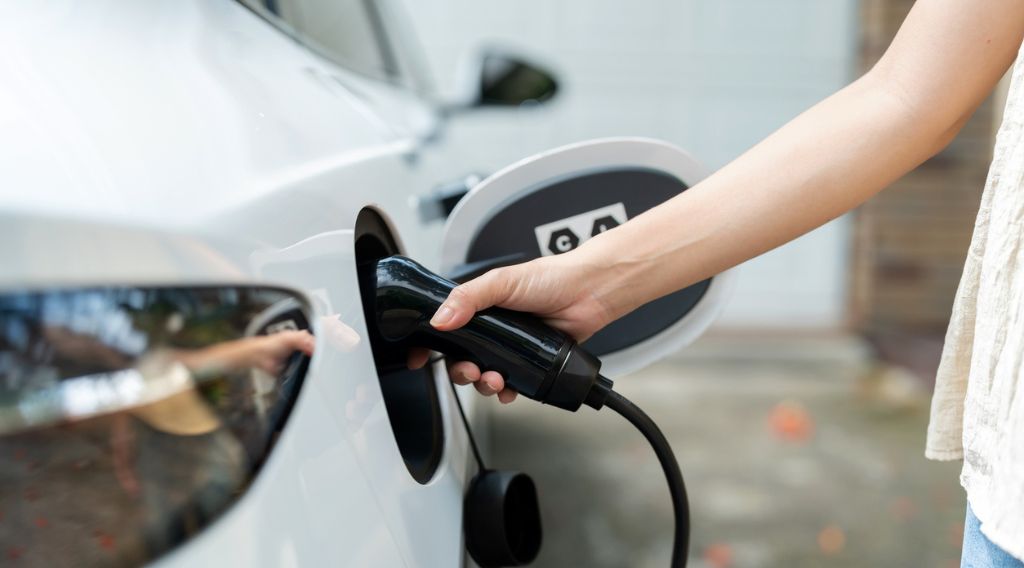
Minnesota is charting an ambitious path toward transportation electrification as a key strategy to achieve its goal of a carbon-neutral, resilient, and equitable future.
The state’s Climate Action Framework sets a target for 20 percent of light-duty vehicles (LDVs) on the road to be electric by 2030, while the Minnesota Department of Transportation (MnDOT) aims for 65 percent of LDVs in the state to be electric by 2040.
Achieving these goals is critical to reducing the state’s greenhouse gas emissions, improving its air quality, and increasing access to low and zero-emission transportation options for its residents. This blog explores the challenges of expanding electric vehicle (EV) charging at multifamily housing and outlines policy solutions that can help ensure all Minnesotans can benefit from transportation electrification.
Equity considerations in expanding EV charging
Addressing the barriers to installing charging at and near multifamily housing is a critical equity issue. Residents in this building type are more likely to be low- to middle-income and identify as Black, Indigenous, or persons of color. Without access to EV charging, they miss out on the advantages EVs have over traditional fossil fuel-powered vehicles, including lower fuel and maintenance costs and the convenience of refueling at home instead of at public gas stations.
Additionally, neighborhoods with high ratios of multifamily housing disproportionately suffer from poorer air quality, making them most in need of zero-emission vehicles.
With 24.8 percent of existing housing units classified as multifamily housing and 28 percent of all households being renters in Minnesota, it will be difficult for the state to equitably reach its climate goals and ensure their benefits extend to all without increasing access to EV charging for residents in multifamily housing.
Challenges of EV charging at multifamily housing
Most home charging installations currently exist in single-family homes. This is primarily because homeowners have more control over their property and electrical infrastructure, allowing them to install charging stations easily.
The installation of charging at multifamily housing, on the other hand, has been lower than that of single-family homes due to the following barriers:
- Limited electrical capacity in older buildings and infrastructure.
- High costs for upgrading electrical systems and retrofitting buildings with EV charging.
- Tenant and landlord coordination issues, particularly around approval and costs.
- Lack of dedicated parking or assigned spaces for EV charging.
- Complexity in metering and billing for shared electricity usage.
- Regulatory and policy barriers, such as zoning and homeowners association restrictions.
The need for EV policy solutions
While the state has made some progress, with electric vehicles (EVs) accounting for one percent of total registered light-duty vehicles in 2023, there is a clear need for action to meet future EV adoption targets.
There are a variety of policy-based options available to increase access to EV charging for multifamily housing residents in Minnesota. They include the following:
- EV-ready building codes for new and renovated multifamily housing (also known as EV-ready ordinances)
- Right-to-charge laws
- Adopting a clean transportation standard
- Financial incentives
Equity-centered multifamily housing codes
The Electric Vehicle Charging for All Coalition defines equity-centered multifamily housing code construction standards, such as building and electrical codes, as being designed to ensure equitable access to EV charging infrastructure for residents of multifamily housing.
These codes aim to reduce the financial and logistical challenges of EV charging installations for builders, residents, and society by requiring that EV charging infrastructure be incorporated during the new construction or major renovation of multifamily housing properties. This proactive approach significantly lowers costs compared to retrofitting buildings with EV charging infrastructure after they are built.
In the US, eight states—California, Colorado, Delaware, Illinois, Maryland, New Jersey, Oregon, and Washington—currently have construction codes that require some level(s) of EV charging infrastructure to be installed at a specified number or proportion of parking spots to support a minimum of level 2 charging at new and renovated multifamily housing.
The level of EV charging infrastructure installed and the number of spots requiring them varies between states and are based on factors like the number of parking spaces and dwelling units.
Several states are also adopting unique provisions in their multifamily housing construction standards. Examples include the following:
- Requirements for shared-use chargers in common parking areas
- Incentives to encourage the installation of fully functional chargers
- Phased timelines to convert EV-ready spots into active charging stations
- Flexible power capacity standards
- Alternative requirements for affordable housing developments
- Requirements that a portion of EV charging spaces be accessible for individuals with disabilities
While Minnesota does not currently have active construction codes that require EV charging infrastructure at new or renovated multifamily housing, the state is currently developing them.
The 2023 Minnesota legislative session saw the passage of SF 3035, which directed The Minnesota Department of Labor and Industry, responsible for updating the state’s construction codes, to develop minimum EV infrastructure requirements for parking at new multifamily housing buildings with four or more dwelling units and all new commercial buildings.
The department is currently convening technical advisory groups to create these requirements for implementation in 2026.
For more information about EV-ready codes, view our fact sheet:
Download factsheet
Right-to-charge laws
Right-to-charge laws ensure that residents of multifamily housing have the legal right to install EV charging infrastructure that can support level 2 or level 1 chargers, addressing a significant barrier to EV adoption for those without complete or direct control over their property.
These laws provide a framework for residents to request charging installations and establish conditions under which property owners or associations must reasonably approve or accommodate these requests. By empowering more residents to install at-home charging, right-to-charge laws can significantly expand EV charging accessibility for residents in multifamily housing. Eleven states—California, Colorado, Connecticut, Florida, Hawaii, Illinois, New Jersey, Oregon, Virginia, and Washington—currently have right-to-charge laws.
The scope of right-to-charge laws varies by state, particularly in who is eligible. Some states limit protections to property owners, including those in condominiums or cooperative housing, preventing governing entities like homeowners’ associations from banning EV charger installations and requiring them to approve reasonable requests. Other states extend these protections to renters, ensuring they can request charger installations despite potential barriers like landlord policies or shared parking.
Minnesota currently does not have any statewide right-to-charge laws, leaving multifamily housing residents and members of home ownership associations without specific legal protections to install EV charging.
To address this, Minnesota should consider legislative pathways to establish them. Legislators could introduce a bill that provides rights for both renters and property owners, explicitly addressing the installation of EV charging infrastructure in multifamily housing.
This process requires collaboration between property owners, utility companies, housing advocates, and environmental groups to ensure the legislation balances accessibility, cost considerations, and stakeholder concerns.
Download factsheet
Adopting a clean transportation standard
A clean transportation standard (CTS) is a market-based policy designed to reduce the carbon intensity of transportation fuels. Under a CTS, fuel producers are required to lower the greenhouse gas emissions associated with their products or purchase credits from cleaner fuel providers, such as electricity suppliers for EVs. By placing a financial value on cleaner transportation options, a CTS incentivizes the use and deployment of low-carbon fuels, including electricity for EV charging.
If Minnesota adopted a CTS, a key consideration would be how the state allocates the revenues generated from residential electric vehicle charging credits. These funds could be used to construct EV charging infrastructure in disadvantaged communities and areas with higher barriers to construction, such as those at and near multifamily housing. These targeted investments can ensure that residents in these communities have access to convenient EV charging.
For deeper insights into what a CTS is, policy analysis, and how one could benefit Minnesota, including opportunities to leverage credit revenues to expand EV charging infrastructure, check out our blog post.
Financial incentives
Financial incentives, such as grants, rebates, and tax credits, can play a pivotal role in overcoming the cost barriers associated with installing EV charging infrastructure at and near multifamily housing. These incentives can come from multiple levels of government and through local utilities to provide financial support options that can sometimes be stacked together.
Financial incentives at the federal, state, and local levels help reduce the cost of installing EV charging at multifamily housing. Federal and state programs provide tax credits and grants to support infrastructure development, some of which focus specifically on underserved communities.
Local governments and utilities also play a role in expanding access by offering financial assistance and rebate programs for charger installations. Property owners and residents should explore funding opportunities through government agencies and utility providers to help offset installation costs.
Several strategies are available to expand and increase access to financial incentives for installing EV charging infrastructure at multifamily housing.
State and local governments can allocate additional funding to existing grant programs or establish new ones tailored to multifamily properties. The same can be done with credits and rebates. Policy makers can also explore matching fund programs to attract private investment. At the utility level, local governments and communities in their service territory can advocate for creating and/or expanding financial EV charging incentives.
Together, these strategies have the potential to create a network of incentives that significantly reduce the cost barrier to installing EV charging infrastructure for multifamily housing.
Visit Drive Electric Minnesota’s EV Incentives Database for a comprehensive list of EV-related incentives, including those for charging infrastructure installation, available in Minnesota.
The path forward for equitable EV charging access
Expanding access to EV charging infrastructure for residents in multifamily housing is crucial for Minnesota to meet its climate and equity goals. Addressing the many barriers will require a multifaceted approach and significant stakeholder collaboration.
By implementing statewide strategies like equity-centered multifamily housing codes, right-to-charge laws, and adopting a clean transportation standard alongside expanding financial incentives, Minnesota can increase access to EV charging infrastructure for residents in multifamily housing and accelerate EV adoption.
Together, these efforts will ensure that all residents, regardless of the housing type, can benefit from the economic, environmental, and health advantages of driving electric.
Share this post


