
Recap: Twin Cities Auto Dealerships and Utilities Workshop
May 16, 2025 | Katelyn Bocklund | Events
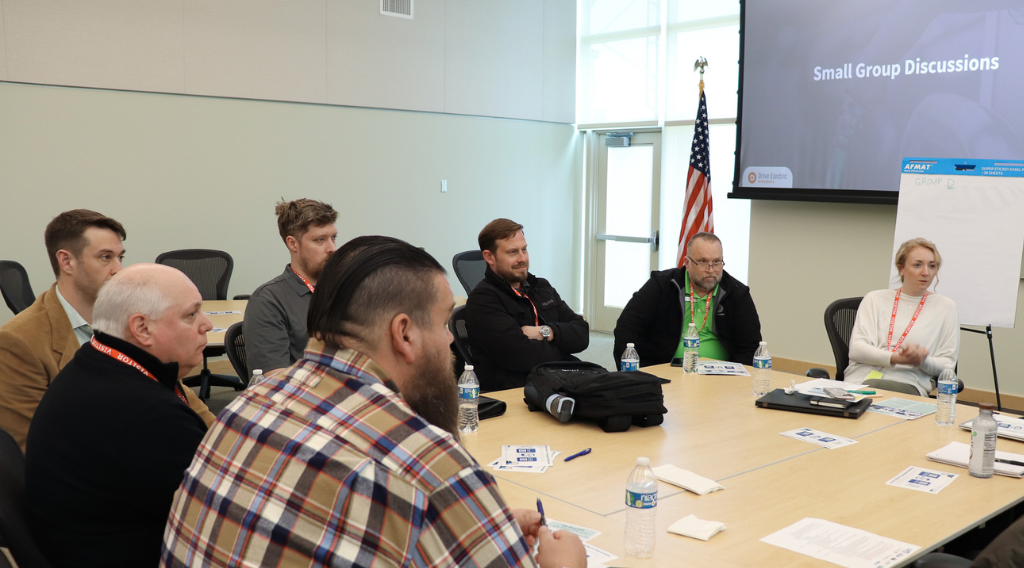
On March 17, 29 individuals from auto dealerships, electric utilities, and their associations gathered at Great River Energy to explore innovative solutions to streamline the purchasing and leasing experience for prospective electric vehicle (EV) owners in ways that benefit both auto dealerships and utilities.
Keep reading to learn more about the issue, potential solutions explored by meeting participants, and next steps.
EV sales require a new approach for dealerships and utilities
For auto dealerships, the goal is simple—they want to sell more cars. As EVs become more mainstream, dealerships want to meet customer demand by selling more of them. The challenge? Selling EVs requires a baseline understanding of charging, which is a new issue area for many dealerships as they’ve never had to focus on fuel before.
Making things even more complicated, Minnesota, like many states, is covered in a patchwork quilt of electric service territories, with each electric utility providing its own unique set of programs and rate options for EV drivers.
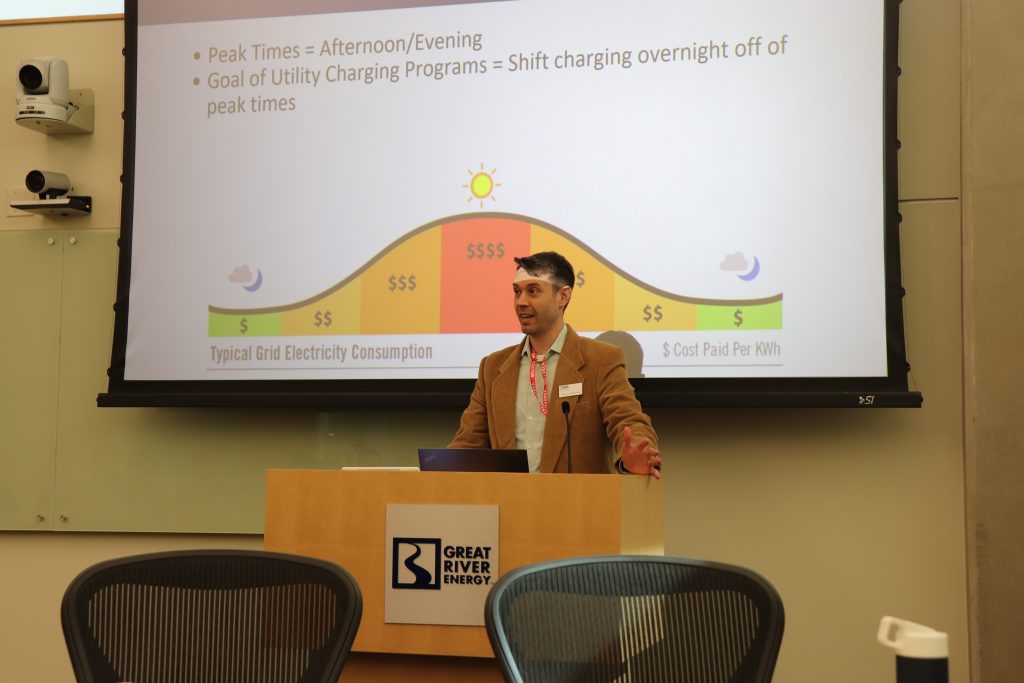
Electric utilities are keen on adding new electric load from EVs as long as that load happens at the right times. Adding unplanned significant loads during the day could stress the demand on the existing electricity supply, leading to increased costs.
That’s where EV programs and rates come into play—by incentivizing customers to charge their vehicles when the grid has more capacity (often overnight), utilities can plan more thoughtfully about required grid infrastructure upgrades to meet increasing loads while keeping costs low for customers. And that means electric utilities need more customers to subscribe to their programs. However, electric utilities have never been a part of the car-buying process—until now.
The workshop for dealerships and utilities
To meet the mutual goals of both auto dealerships and electric utilities, staff from both industries gathered at a workshop facilitated by Drive Electric Minnesota to explore collaboration opportunities.
Workshop partners included Connexus Energy, Dakota Electric Association, Great River Energy, Minnesota Automobile Dealers Association, Minnesota Valley Electric Cooperative, Wright-Hennepin Cooperative Electric Association, and Xcel Energy.
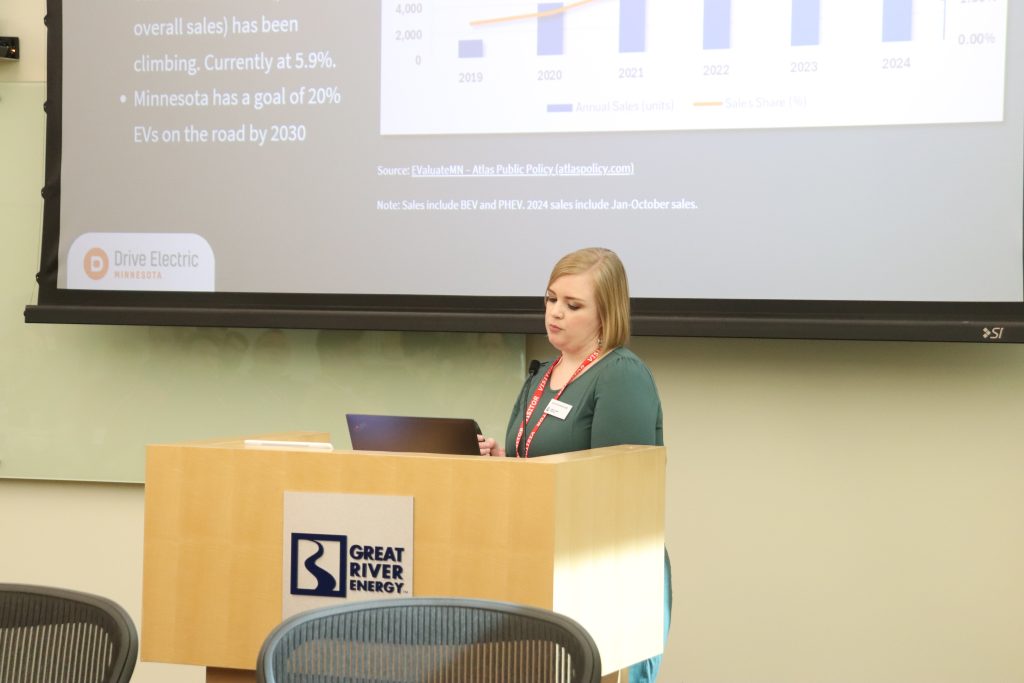
The workshop included level-setting presentations from Katelyn Bocklund of Drive Electric Minnesota, Patrick Mathwig of Dakota Electric Association, and Steve Nisbet of the Minnesota Automobile Dealers Association. However, the real meat of the workshop took place in small group discussions.
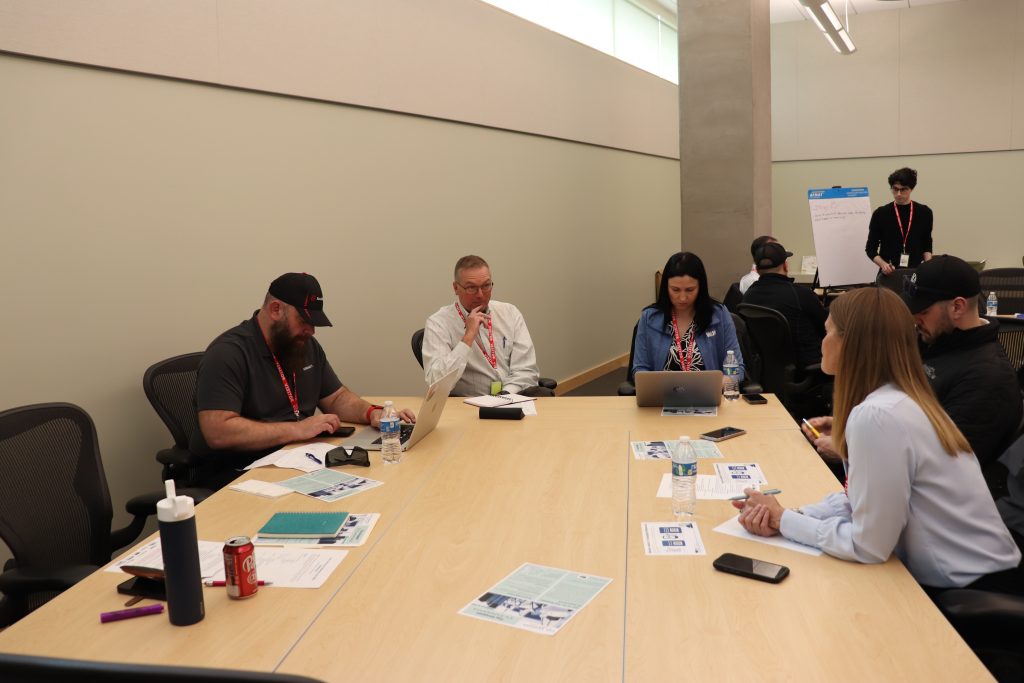
Attendees broke out into four small groups composed of a mixture of utility and dealership representatives.
Key takeaways from the group discussions
Group A
Members talked about the significant challenges dealerships face, including navigating and keeping up to date on EV incentives, programs, and rates. They expressed a need for simplified, unified information and training from utilities. Dealerships find value in utility programs that ease charger acquisition and installation and noted that customer purchases are heavily influenced by pre-dealership online research and peer knowledge.
To improve EV sales, dealers suggested collaborating with utilities on broader educational efforts, partnering with social media influencers, and providing easy-to-use tools like QR codes for sales teams. The group also briefly talked about the importance of utility collaboration with builders to pre-wire new homes for charging, making the customer experience even more seamless.
Group B
Participants identified a need for simplified and accessible EV information for both dealerships and customers. Dealers are eager to sell more EVs but struggle to navigate complex incentive programs. Customers who often arrive with limited knowledge of charging infrastructure seek clear answers on installation costs and monthly charging expenses for home charging.
Members emphasized the importance of a centralized, user-friendly resource that aggregates information on chargers, incentives, utility programs, and regulations. The group stressed the importance of increasing the visibility of public chargers, sharing information with dealerships, and forming collaborative partnerships between utilities, dealerships, and regulatory bodies to streamline EV education and promote adoption.
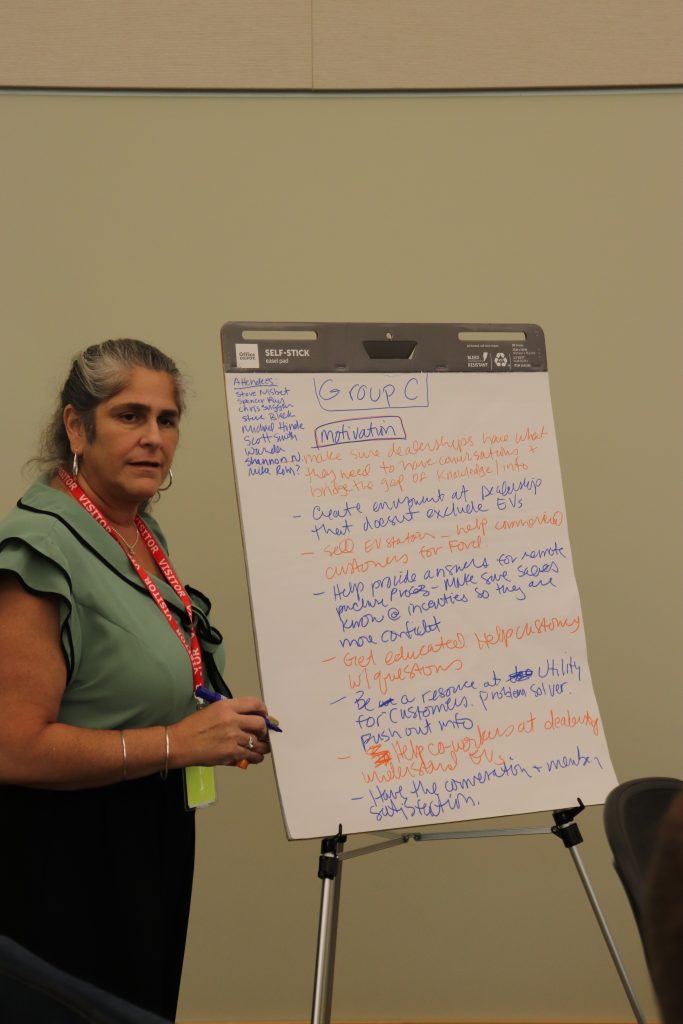
Group C
Members discussed how to bridge the knowledge gap surrounding EVs, aiming to better serve customers by providing accurate information and streamlining the purchase process. Dealerships expressed interest in creating EV-inclusive environments, confidently addressing customer questions about charging and incentives, and facilitating seamless home charger installations.
A key insight was the need to anticipate customer questions, recognizing that many are unfamiliar with the complexities of EV ownership. Participants acknowledged the importance of addressing the total cost of ownership, not just the vehicle price, and were surprised by Minnesota’s relatively low EV adoption. Members highlighted challenges such as salesperson confidence, an electrician’s unfamiliarity with utility programs, and the impact of cold weather on vehicle range.
Members also identified ways to collaborate, including creating a contractor network for installations, developing a utility hotline to assist with charging questions, and providing targeted education for both salespeople and electricians to improve the overall EV buying and ownership experience.
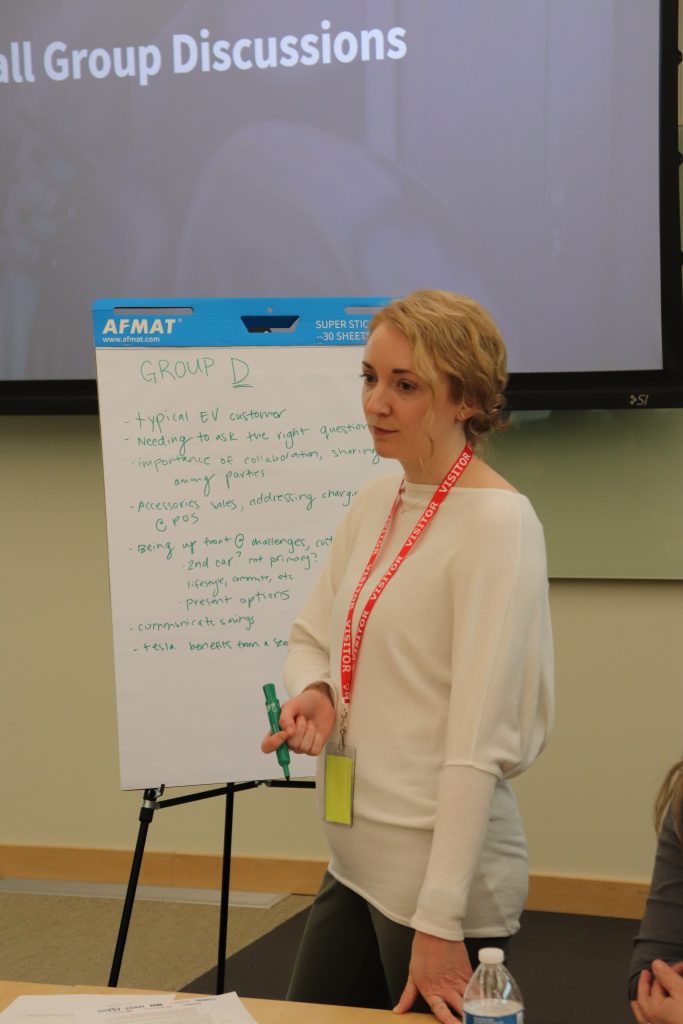
Group D
Members emphasized the importance of understanding the “typical EV customer” and tailoring the sales approach to individual needs and lifestyles. Dealers stressed the need for thorough product knowledge and transparent communication about potential challenges to build customer trust and satisfaction. A seamless customer experience, like Tesla’s integrated approach, was desired, focusing on providing comprehensive information about charging options and cost savings.
Participants highlighted the necessity of collaboration between dealerships and utilities, advocating for joint educational initiatives, branded informational materials, and tools to streamline customer referrals for charging setup. They suggested utilities provide resources to improve their customers’ journeys and address the gap between vehicle purchase and home charger installation through resources such as recommended electricians and multiple bid advice.
Ultimately, dealers noted they would like to avoid becoming charger installation experts, instead aiming to effectively connect customers with utility resources to ensure a positive and informed EV ownership experience.
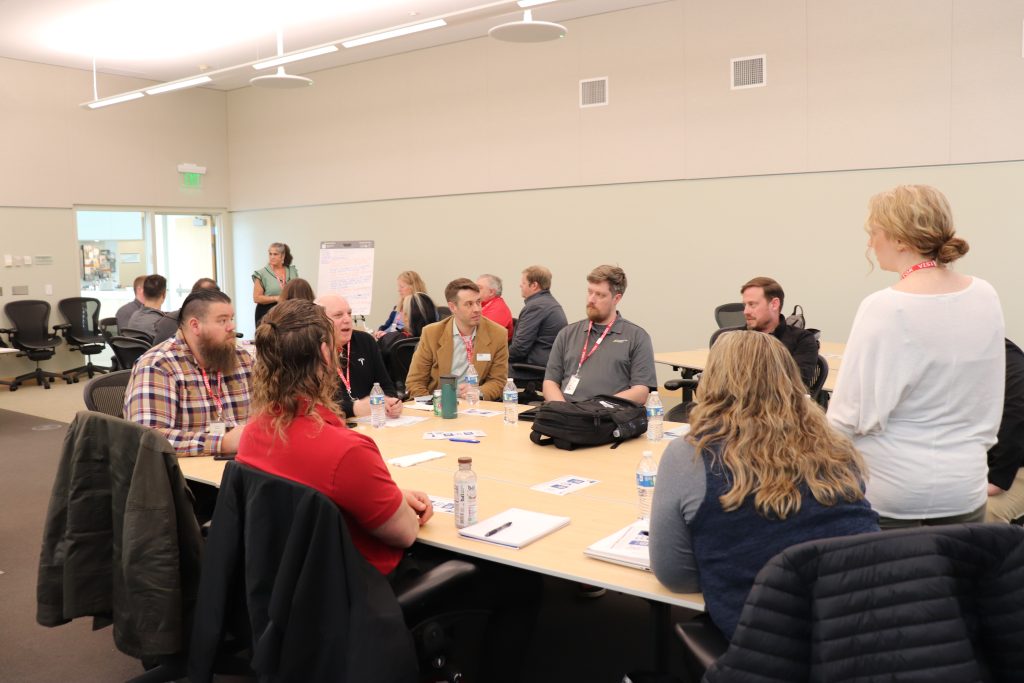
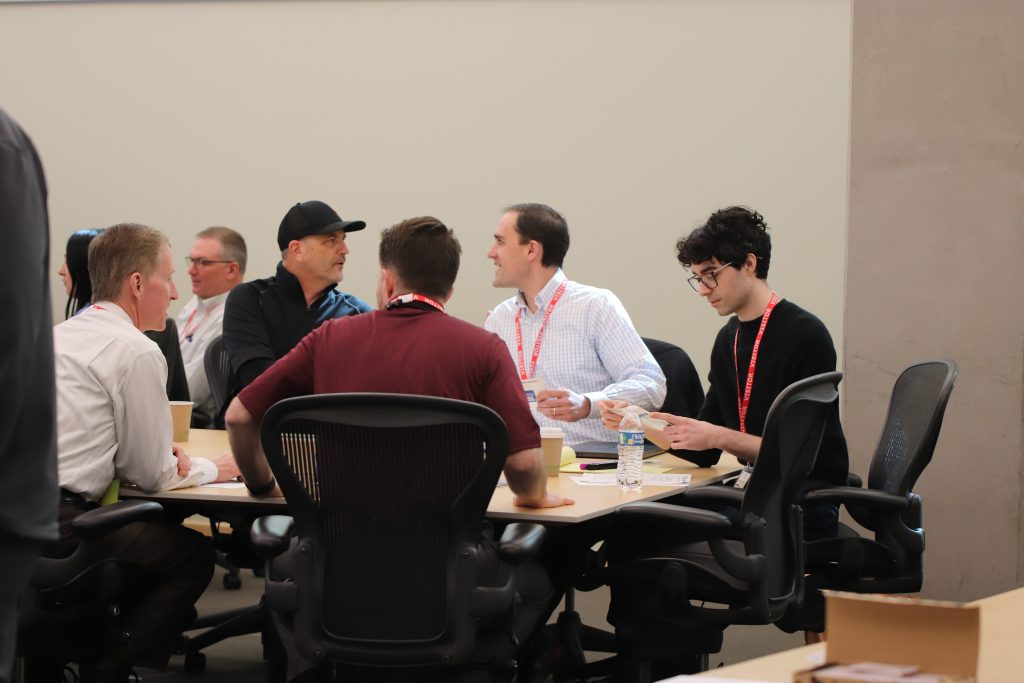
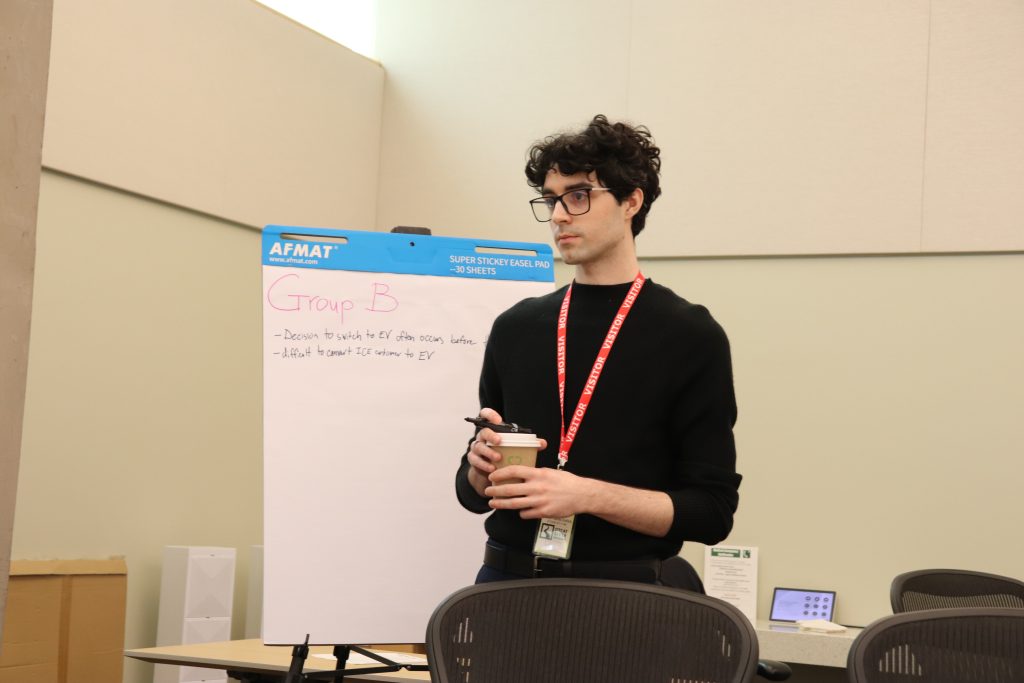
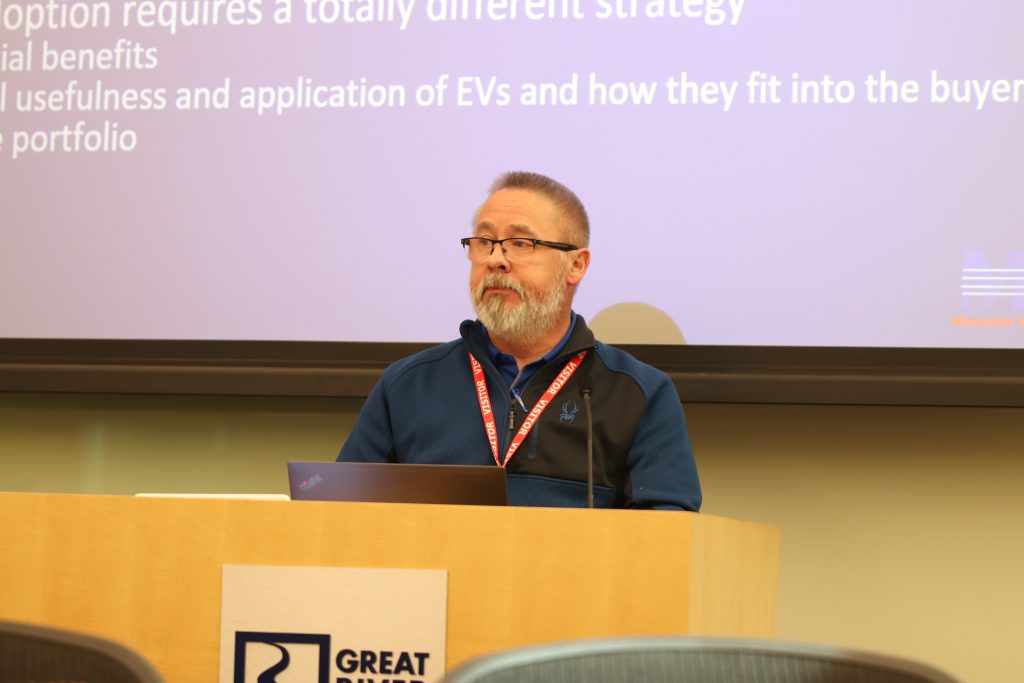
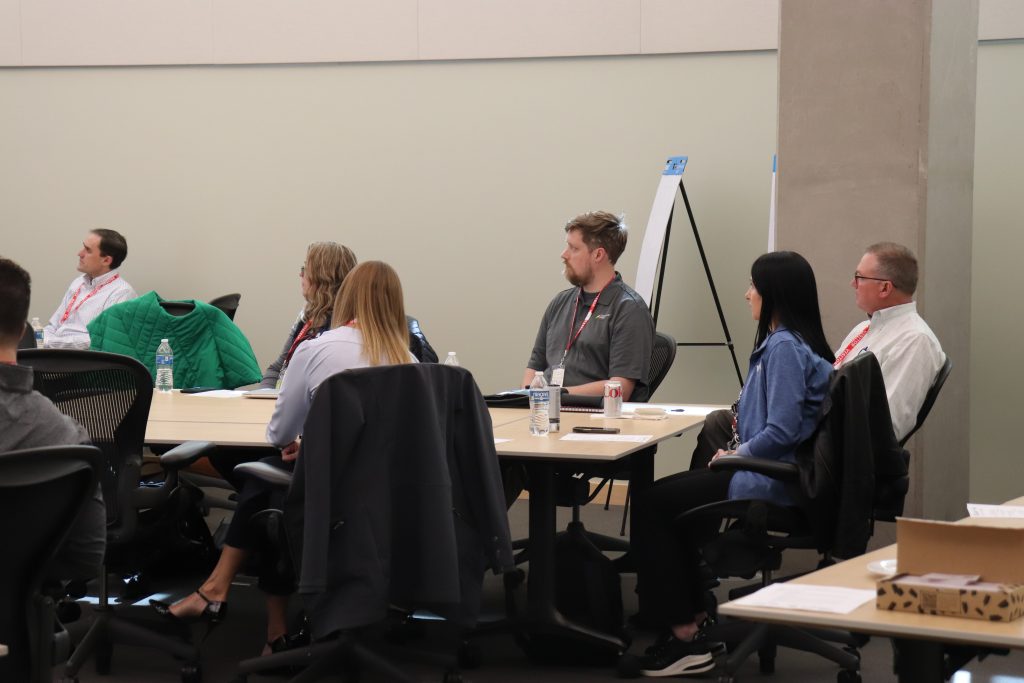
Images taken by Jessica Barnes, Wright-Hennepin Cooperative Electric Association
Actionable ideas from the workshop
Below are the top actionable ideas from each group:
- Improve dealership education. Provide sales staff with more training and resources.
- Make it easy for customers to learn about utility programs, charging, and incentives while they’re at the dealership. Create a hotline to connect customers with utilities while at the dealership. Create a simple, streamlined piece of information listing all available incentives.
- Use social media influencers and YouTube videos to educate customers before they go to the dealership. Be upfront with customers about the pros and cons of EVs—is it right for them?
- Ensure there’s a seamless experience across all dealerships.
All groups mentioned they liked a draft postcard listing utility resources that the Wright-Hennepin Cooperative Electric Association brought to the event.
Next steps for dealerships and utilities
At the end of the workshop, everyone seemed excited about the next steps. Attendees made valuable connections, learned something new, and listened to perspectives they might otherwise not have heard.
Workshop partners are continuing to work with one another to evaluate and implement ideas that surfaced during the workshop.
Utilities and dealerships beyond the Twin Cities area can contact us at [email protected] if they’re interested in learning more about and engaging in ongoing efforts. If you want to be a part of the Drive Electric Minnesota movement, consider becoming a member. Memberships ensure we can continue conducting meaningful work in the state.
Share this post


