
Secure charging
Ensuring your fleet has sufficient charging in place is a critical step in a fleet’s electrification journey.
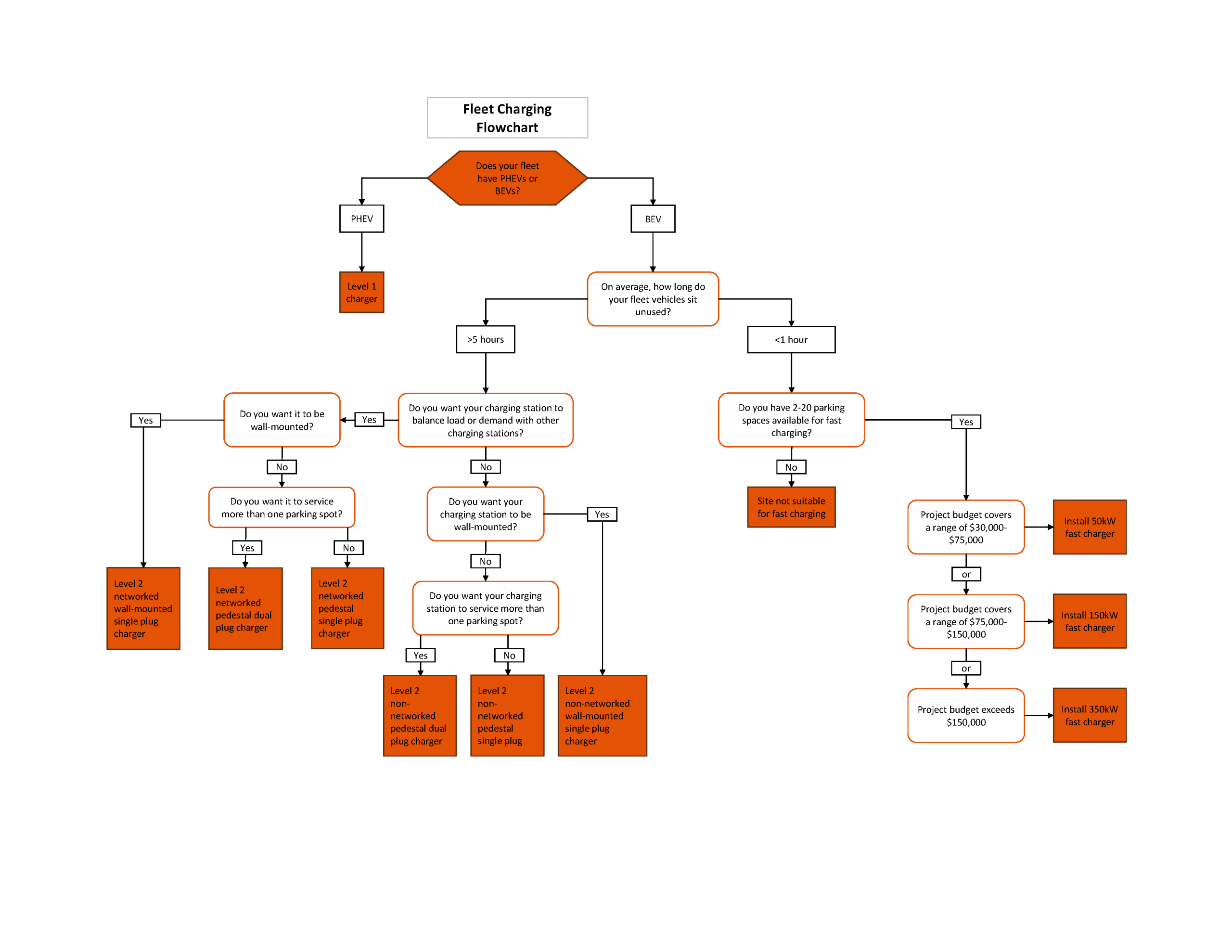
Choose the right chargers
Use our flowchart to navigate the key decisions to make when selecting charging stations.
Contact your utility
Before purchasing a charger, contact your utility to start the service request process. Your utility will work with you on an energization timeline.
Purchase chargers
Purchasing an electric vehicle charging station can be intimidating, given the wide variety of options. Download our guide for information needed to take steps toward purchasing a station, including common station features to consider, where to buy, and funding opportunities.
Install chargers
Looking to install a charging station for your fleet? Use our Fleet Charging Checklist below for steps that should be completed once you’ve decided on a location. Click here to download a printable version of the Fleet Charging Checklist.
Contact an electrician
- Licensed electricians can install charging stations.
- Enphase has a searchable list of electricians they recommend (not limited to Enphase products).
Make sure permitting is in order
- Generally, electric vehicle charging stations only require an electrical permit. In some cases, they may also require a building permit, particularly when structures need to be erected as part of the charging station project (i.e., a carport that provides multiple charging stations).
- Work with your contractor to see if your city/county requires anything specific.
Find the ideal on-site location for charging station(s)
- The most important factor in reducing installation costs is placing stations as close as possible to the electrical panel that will power them.
- Place stations where employees can easily park the fleet overnight.
- Install stations in well-lit or visible areas to help protect them from vandalism.
Build wayfinding into fleet vehicle policy
- Make sure employees know where they can find the charging station.
- Paint the parking space a different color or apply a symbol that signals to other drivers that these spaces serve a purpose beyond regular parking.
Install proper lighting
- Proper lighting ensures that employees can see the plug and feel safe in the dark while using the station.
- Good lighting also helps to prevent vandalism.
Build protection (bollard/wheel stops)
- Accidents happen! A small bollard or concrete wheel stop will prevent a small accident from incurring major repair costs to your charging station.
Secure warranty documentation
- Every major equipment manufacturer includes a warranty with their product.
- Be sure to read the fine print of your warranty; this will save you time and money down the road when potential maintenance of the station is required.
Establish policy for equipment usage and maintenance
- Make sure employees know to plug in the fleet vehicles overnight (or at an ideal time requested by the fleet manager).
- Train employees on how to use the new EV. Keep information in the glove box regarding range and how to properly connect the EV after an employee is done using it.
- Have a plan in place for maintaining the stations. A good practice is to include a contact name and phone number directly on the station so employees know who to call if a station is not working. Additionally, establish a procedure to request repairs for the unit should they need to be made.
Test network
- If using a networked station, make sure it is gathering data properly by using the online tools the manufacturer provides. Contact the manufacturer if you experience any difficulties.
Find on-the-go charging
If your fleet’s duty cycles require longer trips preventing 100 percent charging at the depot, refer to these resources to find charging stations along your routes:
Many electric vehicles also include built-in navigation systems to help drivers find chargers along their routes.